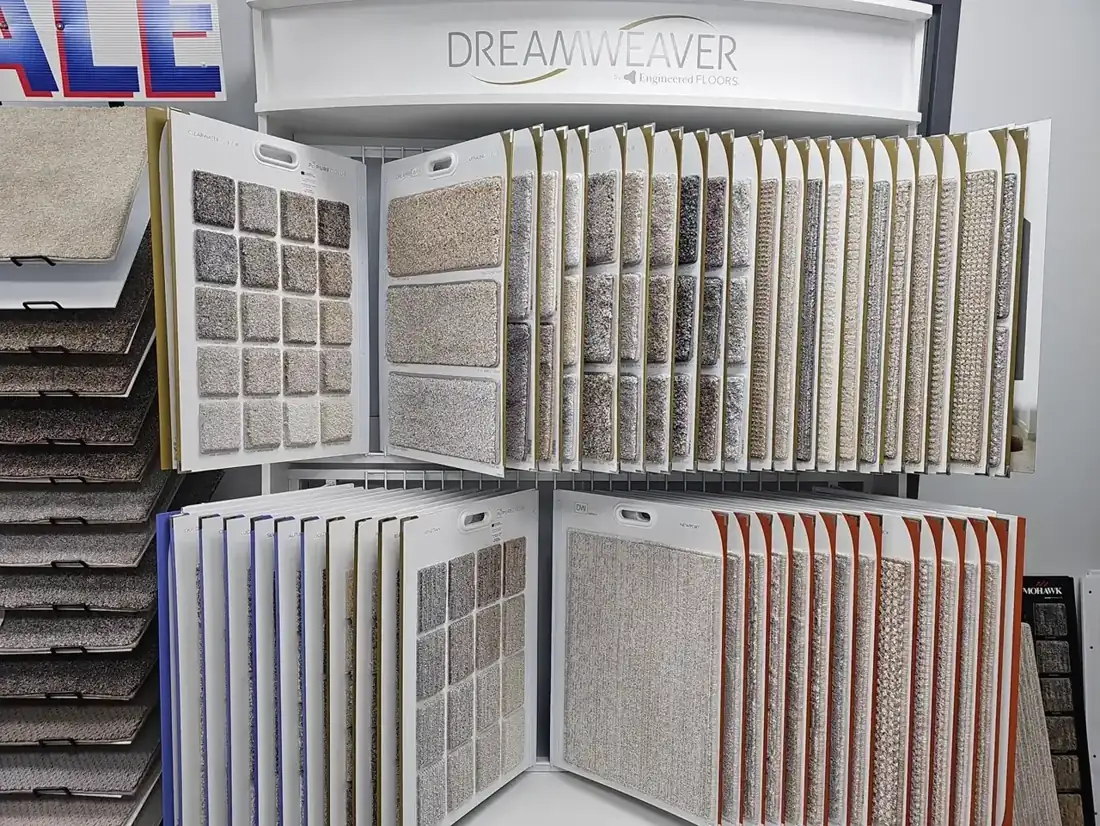
Carpet is one of those products that looks simple from the outside but has a surprising amount of technical depth once you start shopping. Walk into our showroom and you'll find options ranging from $1.50 to $15+ per square foot — and the difference isn't just thickness. This guide breaks down what actually matters so you can make a smart purchase.
Fibre Type: The Most Important Decision
Nylon
Nylon is the gold standard for carpet fibre. It's the most durable, bounces back best after foot traffic (called resilience), and holds dye well for vibrant, lasting color. It costs more than polyester but will outlast it significantly in high-traffic areas. If you have kids, dogs, or a busy household — nylon is almost always worth the extra cost.
Polyester (PET)
Polyester carpets are extremely soft — often softer than nylon — and are inherently stain-resistant because the fibre is non-porous. They're a great choice for bedrooms or low-traffic areas where softness matters more than durability. The trade-off: polyester mats down under heavy foot traffic faster than nylon and can look worn sooner.
Triexta (SmartStrand, Sorona)
Triexta is a newer fibre that sits between nylon and polyester — durability close to nylon, softness close to polyester, with outstanding built-in stain resistance. Mohawk's SmartStrand is the most well-known brand. It's a premium option that's become very popular for family homes.
Wool
Wool is the natural, luxury option. It's soft, durable, flame-resistant, and naturally regulates humidity. It's also significantly more expensive — expect to pay $8–$20/sq ft for quality wool carpet. It requires professional cleaning and is sensitive to certain cleaning chemicals.
Pile Style: How It Looks and Wears
- Saxony/plush: Dense, smooth, formal look — shows footprints and vacuum marks easily
- Frieze (twisted): Tightly twisted fibres with a casual look — very good at hiding footprints
- Textured cut pile: Multi-level cut pile that hides traffic patterns well — the most popular residential style
- Berber (loop pile): Loops not cut — very durable, great for basements and rec rooms; avoid with pets as claws can snag
- Cut-and-loop: Combines cut and looped fibres for patterns — good traffic hiding, stylish
Face Weight and Density: What the Numbers Mean
Face weight is the weight of the carpet fibre per square yard (in ounces). More is generally better, but it's only meaningful when combined with density. A carpet with 40 oz face weight and high density will outlast a 60 oz carpet with low density.
Density is calculated by multiplying face weight by 36, then dividing by pile height. A density rating above 2,000 is good for residential; above 3,000 is excellent. Ask to see this number when shopping — good manufacturers publish it.
Pro Tip: The 'thumb test' — press your thumb hard into the carpet. If you can easily feel the backing, the carpet is too sparse for heavy-traffic areas.
Underpad: Don't Skip This
The underpad (underlay) dramatically affects how your carpet feels and how long it lasts. A quality underpad adds cushioning, insulation, and absorbs impact so the carpet fibre doesn't wear as quickly. For residential carpet, 8 lb rebond foam at 7/16" thickness is a solid standard choice. Don't let a contractor install cheap thin pad to save money — it's false economy.
Matching Carpet to Room
- Master bedroom: Plush or frieze in polyester or nylon — softness is priority
- Kids' rooms: Nylon or triexta textured cut pile — durability and stain resistance
- Living room: Textured cut pile or frieze in nylon — traffic hiding, durability
- Basement: Berber or frieze in nylon with moisture-barrier pad
- Stairs: Dense nylon cut pile — high wear area, needs durability
Our showroom has over 200 carpet samples across every category. Bring in a photo of your room and our team will help narrow it down to the right pile, fibre, and colour for your home.